

How To Die
death doulas, ancestor talk, orgies, effigies

I went on a beautiful, joyful vacation to California with my partner this month and walked nearly every day, gratefully, with thoughts of aging, mourning, and death. Yep, it’s midlife.
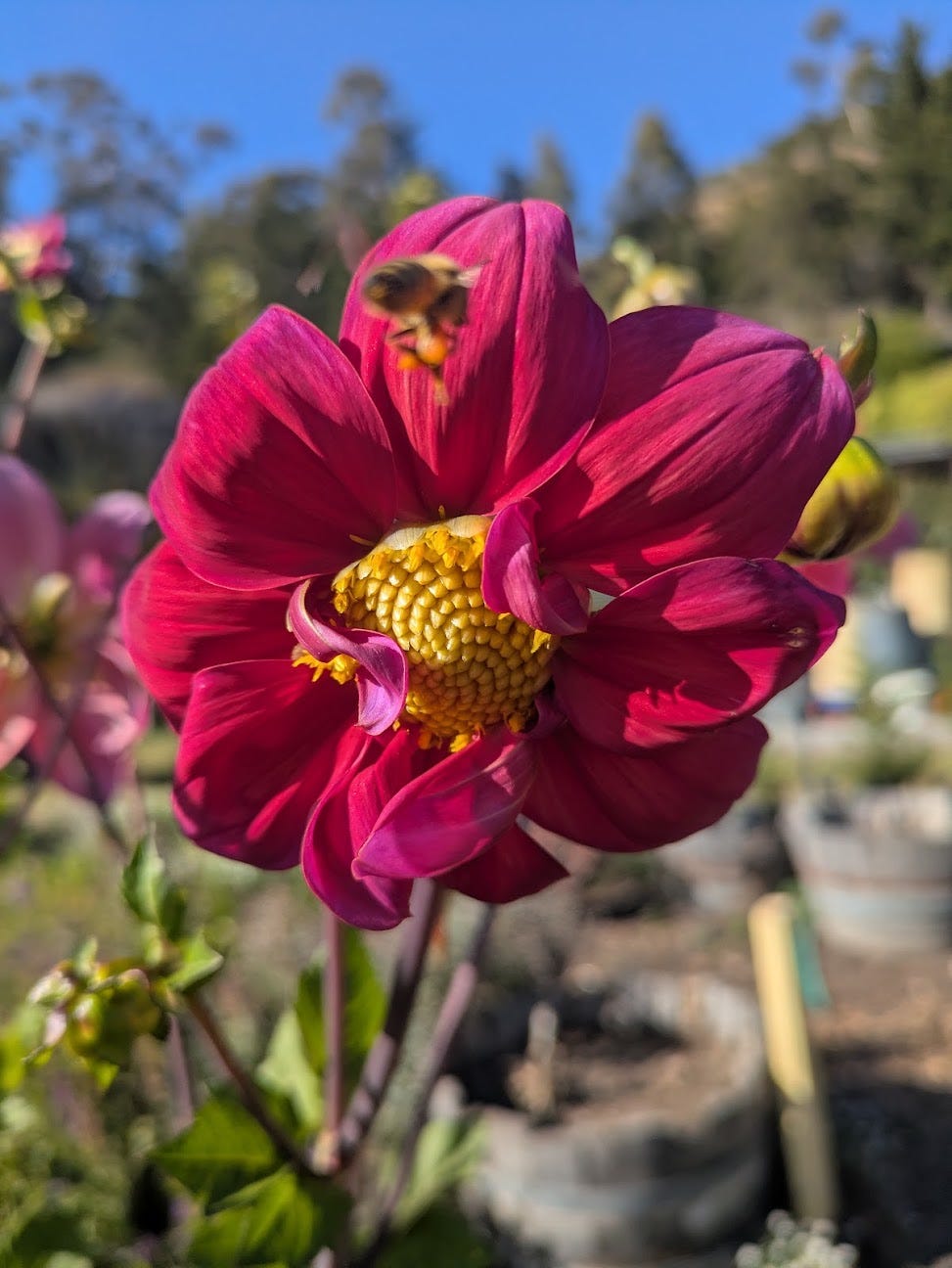
Our first stop was a riverside campout celebrating the 50th birthday of a friend of decades. I gave her my marked-up copy of How To Die, the James S. Romm short collection of Seneca’s meditations on death and dying. I think she took it as both the sincere offering and the morbid gag gift it very much was. She has extensive clowning experience.
“It’s a great thing to learn how to die,” the Stoic writes. We should spend our life preparing for the inevitable endpoint, and keep death as our destination in view: “Whoever doesn’t want to die, doesn’t want to live.” (If you want more Stoic philosophy, but in the form of a madcap midlife rom-com, may I suggest Maria Semple’s new novel. )
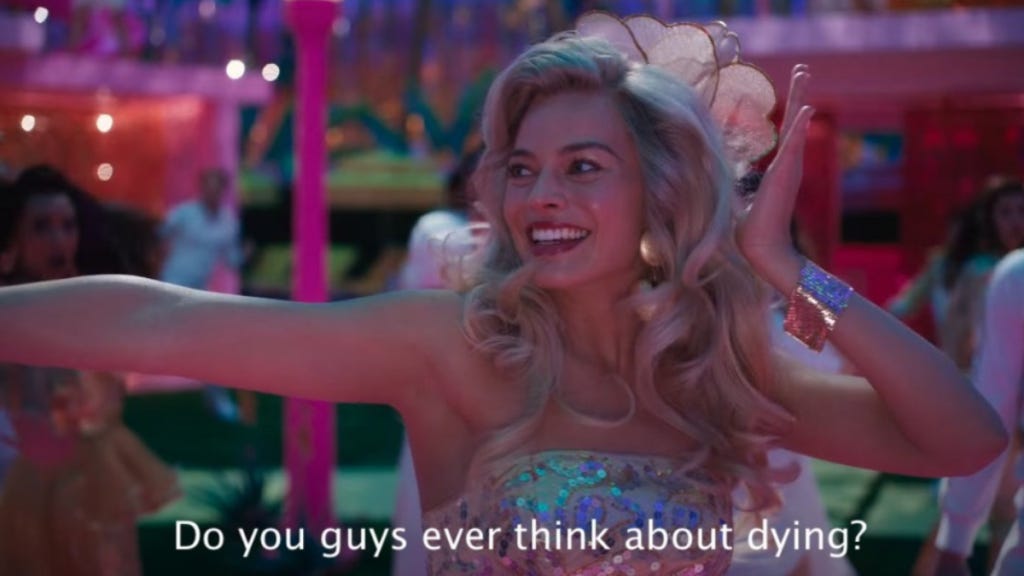
It’s been a year since the death of teacher Joanna Macy at the age of 96. Macy taught that our pain for the world is a gift, including grief, which ties us to who and what we love. This year, especially while writing my book, has taken me to so many places where her name is on people’s lips with gratitude.
On this trip, we passed through Berkeley, California, my first time back since 2024, when I visited her in her home to record the final episode of Jess Serrante’s podcast, We Are The Great Turning.
“It's like preparing my shroud. You're preparing something that will be my gift when I'm gone,” she told Jess in the podcast, knowing that this preparation would be a gift to all her students and friends. “When the emptiness comes, and you look to where I sit on this couch and I'm not here, you'll know, you’ve been with me gone already.” To be completely with someone, we have to keep in mind that we might never know the last time we’re going to see them. We have to be with them gone.
We met another dear friend of two decades for lunch in Monterrey. He had just that week lost a good friend, only in his 40s, father of a young child. He told us how loved ones were able to gather at the man’s home in the woods for the final days, and others far and wide got on Zoom and spoke for over two hours, telling all the stories and sharing all the memories, and they were able to send the dying man the recording, because they hadn’t waited to say these things until after he was gone.
This reminded me in turn of the passing of Rabbi Arthur Waskow z’’l at 92 years old, last October. He held a Zoom call while on hospice, with over 200 people attending, and even led us in a farewell song—a cheerful, tavern song about heading out on the road.
Death is never a good thing, but it seems there is such a thing as a good death. Our friend told us about another mutual friend who, after a couple of ayahuasca journeys, has embarked on a career as a death doula. That is, someone who accompanies a dying person and their family with practical, emotional, and spiritual support.
She practiced on him, and asked him some of the questions that a dying person, which is all of us, should be prepared to answer. Like “What do you want to be remembered for?” and “Is there something important you haven’t told someone?”
Yesterday I sent him this Instagram post, to remind him of the conversation:
Then I visited a friend in Oakland who was deathly ill a few years ago, and has now recovered. He told me that at the time, he had a consultation with his ancestors, via an intermediary in I believe Nigeria. They were less concerned with welcoming him across, and more interested that he do right by their memory on earth.
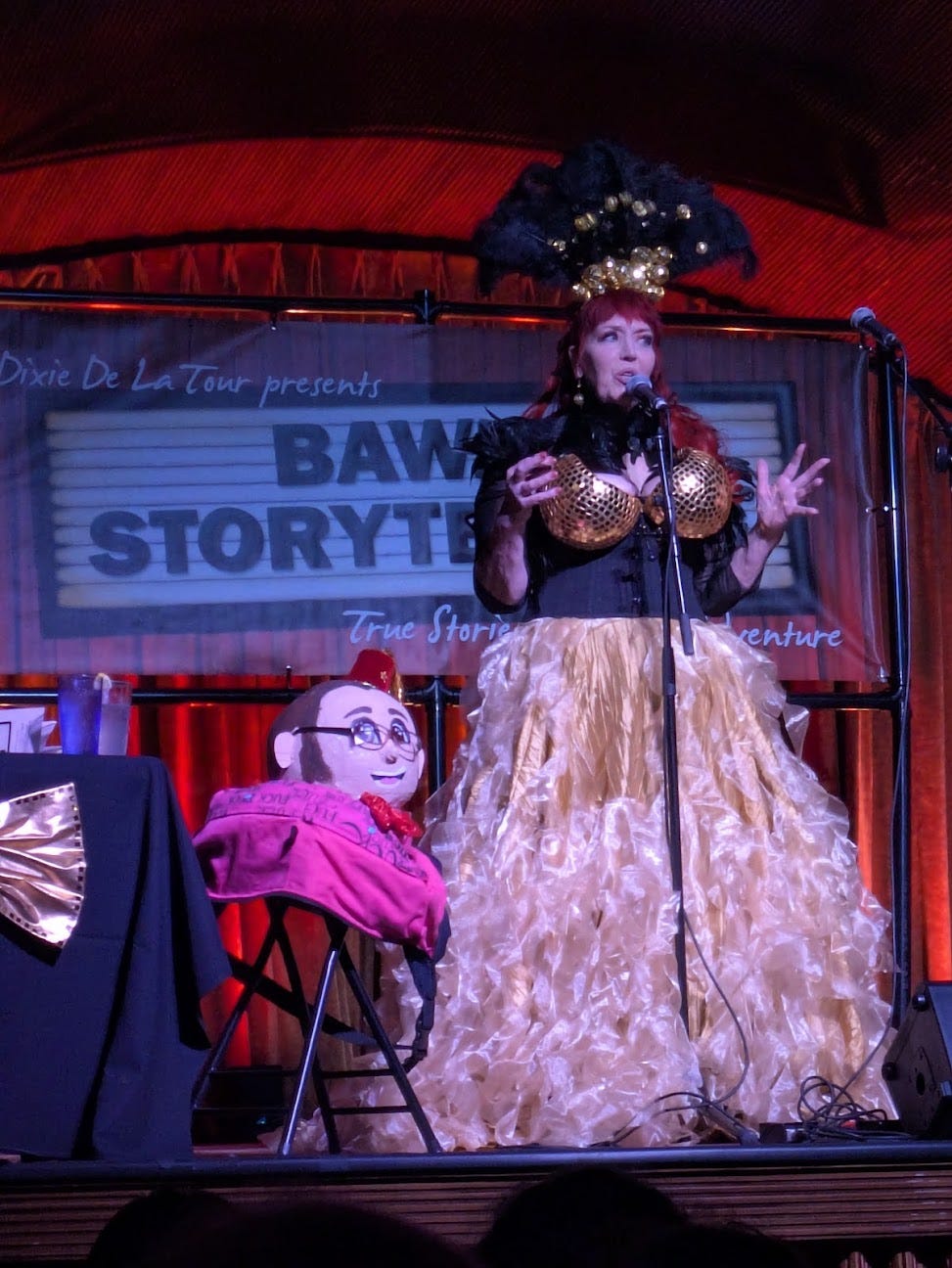
This friend and his wife took me to the 20th anniversary of Bawdy Storytelling, which is a live, true, storytelling show, like the Moth, but X-rated. Dixie De La Tour, the founder and host, told the story of how she had recently lost a dear friend. Just before his memorial service, she threw a big orgy at a castle, and brought an effigy of her friend’s head in papier mache, which various people would don while doffing everything else, so “Jim” could frolic in the garden of earthly delights one more time. I feel like this must be someone’s ancestral, forgotten custom that she inadvertently reanimated.
Dying is something that is happening to other people until it's not. So the instructions coming in to me from the universe seem to be to show up with people and share their grief, to give ancestors their due, as well as to stay current with communal grief.
Speaking of that last part, given the fires, the heat, and the flash floods, I tried offering a public climate grief ritual this week on Tisha B’ Av, which is the Jewish public day of mourning, the saddest day in the calendar. We sat in the very loud park and read the Book of Lamentations. I knew it would be inherently aversive for people, and it was last-minute to boot. Just five people showed up. And, I’m so glad we did it. I got lots of enthusiasm and support from various people and organizations, and I think it’s laying the groundwork for something bigger to come. It was something like what Rabbi Waskow would have done, and did do; to try to continuously resuscitate these ancient spiritual technologies for the challenges of these times.
I find it so much easier to accept my own eventual death than the destruction of these forests and the overshadowing of my children’s futures, at least from where I sit at this moment, healthy and energetic. One is an inevitability; the other a crime.
I’m leaving you swaying back and forth here between YOLO and memento mori; balancing the time for dancing and the time for mourning.
As I go forward I know time will only get shorter and my past will get longer. I’ll lose more people, more relationships. I’ll start to lose strengths and capabilities too. And who knows what losses are to come in the nation and the world. I hesitate to guess.
My ambition is to feel strong enough to carry the growing weight of the past, grief, loss, and death gracefully. Reminds me of the legendary ancient Greek Olympian who carried a calf on his shoulders every day until it was a fully grown bull— progressive overload, but of the spiritual sort.
What’s the most important thing you have learned about dying?
PS. right after I finished this I found out my friend Alec Hanley Bemis had posted a mourning playlist—worth checking out!
PPS: Then my sister Kezia Vida published this absolutely gorgeous meditation on death and love, go read the whole thing:
Death is never a reason not to love, it is the reminder to love now, to not waste even one moment without it. I am learning about this right now.
Such a beautiful and critically important read. Anya, I must introduce you to a dear friend and the founder of the organization, End Well. 🩵
One more from Stephen Jenkinson: "When I glimpsed the end of what I claimed to love, being alive, that was the beginning of my capacity to love it. That's about as counter-intuitive as it can get. That when I saw the end, I was granted the capacity to fully inhabit, and locate myself in being alive."